Most service businesses don’t have an email problem.
They have an offer problem.
If your emails “keep in touch” but don’t create bookings, it’s usually because the next step is fuzzy.
People like clear choices, especially when they’re busy, price-sensitive, or unsure who to trust.
This guide walks you through email marketing service businesses can run with a simple two-offer system.
It’s built for real life: booked-out weeks, no time for long newsletters, and a need for steady revenue.
The two-offer system: fewer choices, more bookings
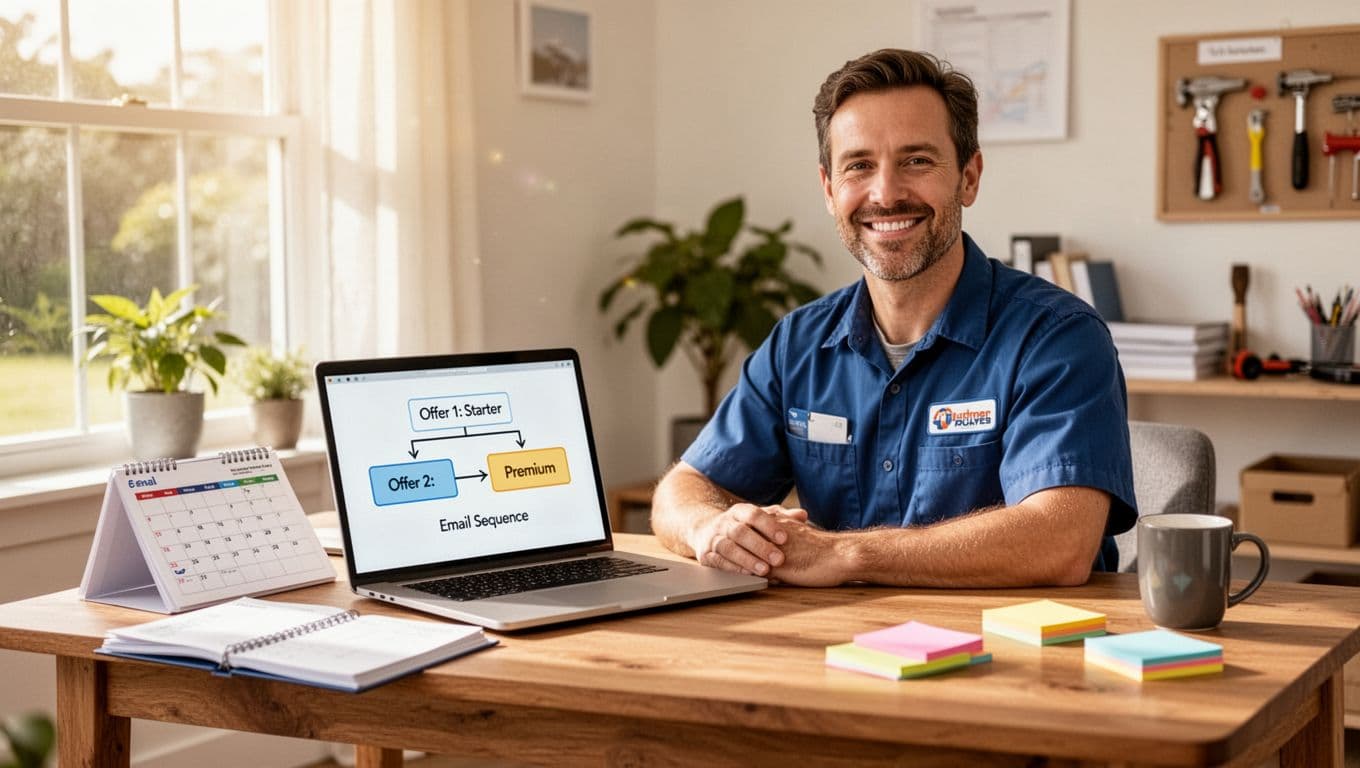
Here’s the idea: you sell two things, on purpose.
- Offer 1 (Starter) is the easy “yes”. Low risk, fast to decide, simple to deliver.
- Offer 2 (Premium) is the better long-term outcome. Higher value, more profit, more commitment.
Think of Offer 1 as the front door, and Offer 2 as the comfortable lounge room. Most strangers won’t walk into the lounge room first. They need a quick win and proof you’re good.
Offer 1 examples for service businesses:
- A “first visit” special, diagnostic, inspection, or assessment
- A one-off treatment session (physio, massage, coaching)
- A basic clean, tune-up, or safety check
Offer 2 examples:
- A maintenance plan or annual service agreement
- A 6 to 12-week program (fitness, rehab, coaching)
- A priority support package or retainer (IT, bookkeeping)
Why it works: you stop asking people to decide everything at once.
Your email job becomes simple: help the right people choose the next step, based on where they are now.
If you want a service-business angle on turning emails into bookings, see email marketing ideas for increasing bookings.
Even if you don’t use their software, the booking mindset is spot on.
Offer 1 emails: turn a new lead into a booked job
The goal of Offer 1 emails is speed and clarity.
You’re not trying to teach everything you know.
You’re trying to get someone from “maybe later” to “let’s lock in a time”.
Start by tightening your entry points.
For many service businesses, leads come from your site, referrals, or Google Business Profile.
This is where web design matters, because your form and booking button are part of the funnel.
Same with local SEO, because it brings in people with immediate intent.
Once they opt in (or enquire), your first emails should do three things:
- Set expectations: what happens next, how soon you reply, what you need from them.
- Remove doubt: show how you work, what you charge for, what clients usually get.
- Make the ask: book Offer 1, with one link and one clear outcome.
A practical pattern is “helpful, helpful, invite”.
For example, send two short tips that solve a small problem, then invite them to your starter service.
If an email doesn’t ask for a next step, it’s usually a diary entry, not marketing.
Keep the writing plain.
Short sentences.
One main point per email. If you want a straightforward approach to writing sales-focused emails without turning into a copywriter, profitable emails in 10 minutes a day is a good reference.
For more service-business campaign ideas (welcome emails, seasonal promos, reactivation), this service-based email marketing guide has a helpful spread of examples.
Offer 2 follow-ups and automation that keeps revenue steady
Offer 2 is where service businesses make their money easier.
Less chasing, fewer gaps in the calendar, more repeat work.
The mistake is pitching Offer 2 too early.
Sell it after a win, when trust is highest:
- After a job is complete
- After a client hits a milestone
- After they praise the result (even a simple “thanks!”)
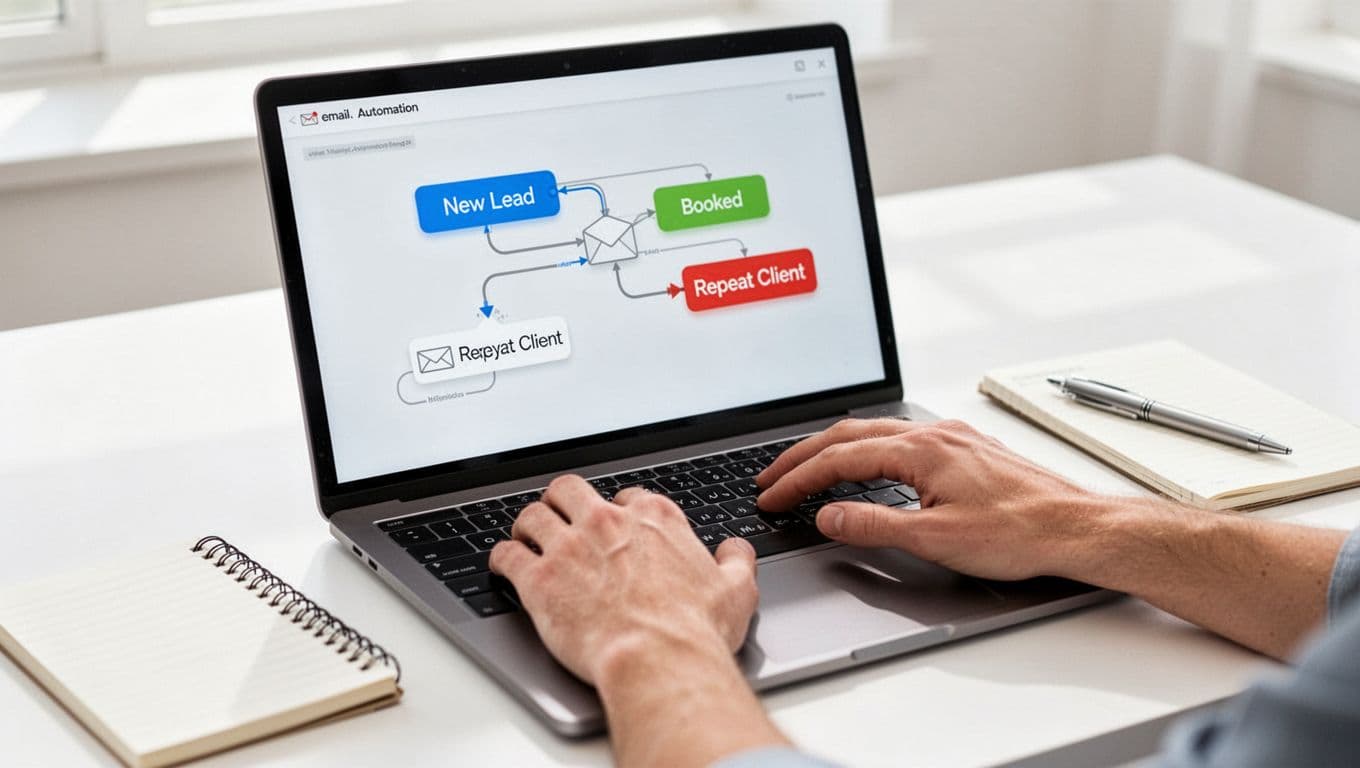
To keep it simple, tag people into three buckets:
- New lead (hasn’t booked)
- Booked (has an appointment, or just finished)
- Repeat client (has bought twice, or stayed active)
Then match the message to the moment.
New leads get Offer 1.
Booked clients get prep and follow-up.
Repeat clients get Offer 2 and referral prompts.
Here’s a clean 7-email sequence you can run without turning your life into email admin:
- Welcome + what to do next (link to book Offer 1)
- A quick win tip (one problem, one fix)
- Your process (how you work, what a first visit looks like)
- Offer 1 invite (who it’s for, price range if you can)
- Objection handler (time, cost, uncertainty, with a simple answer)
- Proof (short story, review, or before/after outcome)
- Offer 2 preview (for those who want ongoing results)
After email 7, don’t spam.
Switch to a light rhythm, like fortnightly or monthly, plus seasonal reminders.
If you want campaign prompts that fit trades and field service teams, these email marketing tips for service businesses are worth scanning.
One more point: email works best when it supports your bigger engine.
Pair it with digital marketing basics (traffic plus conversion), use social media marketing to earn attention, and apply sales skills in your follow-up calls.
It all feeds the same lead generation flywheel, just through different channels.
Putting the two-offer email system into action this week
Start small. Pick Offer 1 and Offer 2, write the 7 emails, and set one booking link.
That’s enough to get momentum.
Once it’s running, improve one thing at a time: subject lines, the Offer 1 pitch, then the Offer 2 timing.
The compounding is real, because every new lead hits the same follow-up.
If you want to build the rest of your pipeline around this, these two guides pair well with the email plan: build a lead generation funnel in under a week and practical tips to attract leads fast.
Your inbox doesn’t need more “content”.
It needs clear offers and a simple path to yes.