Most service businesses don’t have a lead problem.
They have a fit problem.
Too many enquiries come from people who were never going to buy, or who freeze the second they hear the price.
Pricing transparency is one of the cleanest ways to fix that.
It helps the right people raise their hand, and gives the wrong people a reason to move on before they clog your calendar.
If you want better leads, clearer pricing is a strong place to start.
Hidden pricing feels safe, but it creates friction
A lot of owners keep prices off the site because the work varies.
Fair enough.
A plumber, broker, consultant, designer, or agency rarely sells one identical job all day.
But blank space where pricing should be doesn’t remove the cost question.
It puts the whole burden on the buyer.
Think about walking into a restaurant with no menu.
You might still sit down if you already trust the place, or don’t care what dinner costs.
Most people won’t. Online, the same thing happens fast.
Good prospects compare options quickly.
They might find you through local SEO, a referral, social media marketing, or a web design refresh.
If they can’t tell whether you’re roughly in budget, many will click back and keep going.
The leads who do enquire are often the least qualified.
Some want the cheapest number in town.
Some want five quotes before they share basic details.
Some are serious, but tense, because they expect surprise fees later.
If a prospect needs a phone call to learn whether you’re even close to their budget, you’re asking them to take a risk before you’ve earned it.
That risk chips away at trust early.
That’s why building client trust through transparent pricing matters so much.
It changes who contacts you in the first place.
Better leads start with clearer pricing
Visible pricing doesn’t scare off all buyers.
It scares off the wrong buyers.
That’s the point.
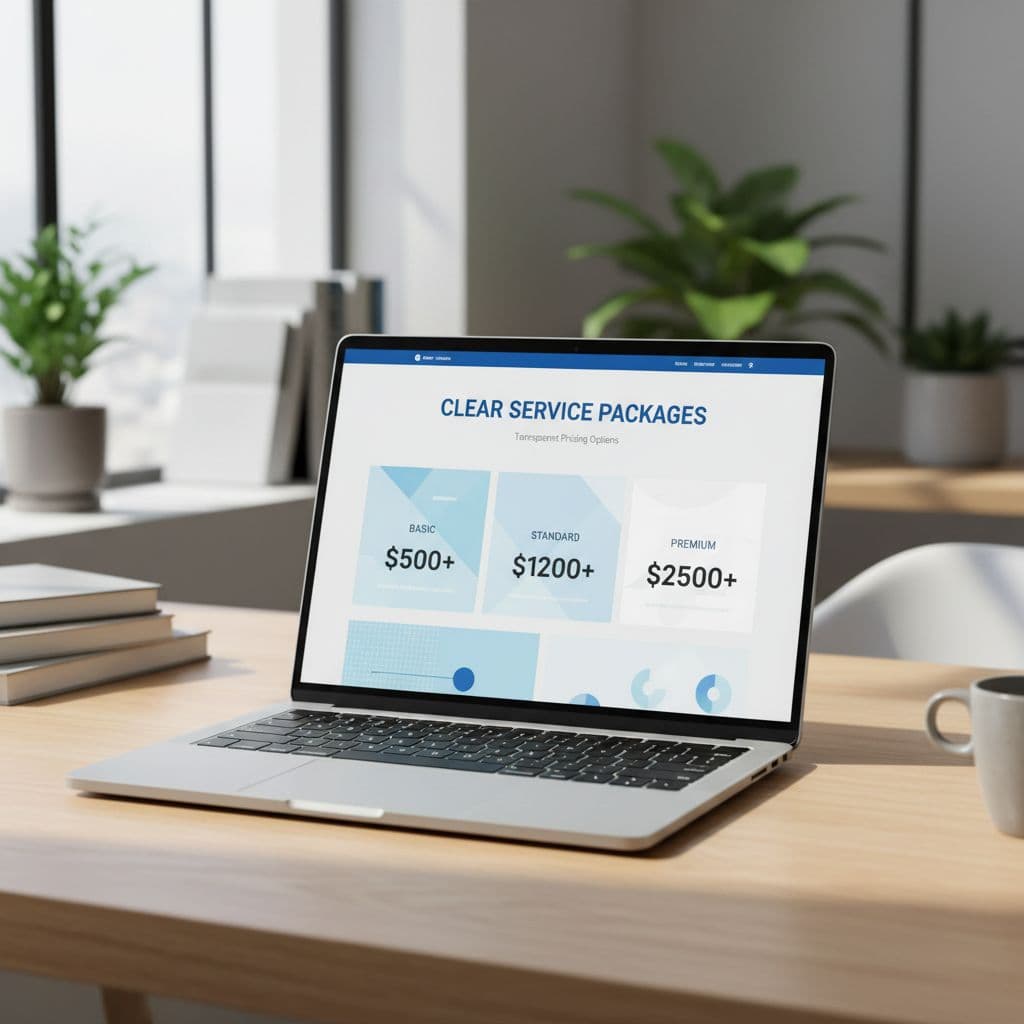
The best enquiries usually arrive pre-sold on the category and pre-educated on the budget.
They may not know the exact scope yet, but they know you’re in the right ballpark.
That changes the whole conversation.
In my experience, visible pricing changes the tone of the call before the call even happens.
Instead of spending the first 15 minutes explaining why you cost more than a bargain operator, you get to talk about the job, the result, and the timeline.
Your sales skills start working where they should, not in a price ambush.
Clear pricing improves lead quality in three simple ways.
It filters by budget, it sets expectations, and it reduces curiosity clicks from people who were never serious.
A useful guide on publishing rates for professional services makes the same point: visible rates can pre-qualify prospects before they ever book time with you.
This matters for service businesses of every size.
A solo operator saves hours each month.
A growing team gets cleaner handovers from marketing to sales.
A larger firm can protect staff time and forecast capacity with less guesswork.
Put simply, pricing transparency for service businesses is a filter.
It trims noise so your pipeline contains more people who can buy, want the outcome, and are less likely to disappear after the proposal.
If every job is custom, you can still be upfront
The usual pushback is easy to predict: “My prices depend on the job.”
That’s normal.
Full fixed pricing isn’t the only version of transparency.

For most service businesses, being open about pricing means giving enough context for a buyer to self-qualify.
You don’t need a calculator that predicts every job to the dollar.
You need enough detail to answer the buyer’s first question: “Am I roughly in the right range here?”
A strong pricing page usually includes four things:
- A starting price or minimum engagement, so people know your floor.
- A sensible range for common job types, based on real work you already do.
- A short explanation of what shifts the price, such as scope, urgency, travel, add-ons, software, or revisions.
- Clear notes on inclusions, exclusions, timing, and whether GST is included.
That format works across a lot of categories.
A web design studio can show starting prices for brochure sites, eCommerce builds, and monthly support.
A bookkeeping firm can publish package ranges based on transaction volume.
A trades business can state call-out fees, hourly rates, and after-hours loading.
You can also add a line about who you’re best for.
That’s underrated.
If your minimum project is $2,500, say it.
If your service suits established businesses more than startups, say that too.
This is where many owners get stuck.
They think pricing has to be perfect before it can be public.
It doesn’t.
It has to be clear enough to guide a decision.
Clear ranges do more than qualify leads.
They calm people down.
The buyer arrives informed, not suspicious.
That’s a much better place to start.
Clear pricing makes your marketing and sales work harder
A lot of businesses try to fix weak lead quality with more traffic.
More digital marketing.
More social media marketing.
More lead generation campaigns.
More spend.

That can help, but only if the message matches the landing experience.
If your ads promise clarity and your site hides the number, the click doesn’t turn into trust.
Transparent pricing improves the full system.
Your landing pages do a better job.
Your local SEO pages attract people who can afford the service.
Your enquiry forms get cleaner answers because people already know the range.
Even email follow-up becomes simpler, because there are fewer “just checking prices” messages.
This also sharpens sales calls.
Prospects who have seen the price range ask better questions.
They focus on fit, process, risk, and results.
That makes the conversation calmer and more honest, which is exactly why transparent sales pitches matter to buyers in the first place.
Outside your own site, the same pattern shows up in broader writing on pricing transparency and client trust.
Buyers respond well when businesses stop treating cost like a secret.
If you’re serious about better leads, don’t treat pricing as an isolated page.
Treat it as part of the full buying path.
Message, page, enquiry, call.
Each step should feel like the same business talking.
Where transparent pricing can backfire
Clear pricing works best when the detail is honest and current.
Get sloppy, and it can do the opposite.
The biggest mistake is bait pricing.
That’s the low headline number that almost nobody qualifies for, followed by compulsory extras later.
Another common miss is publishing prices with no context, which leaves buyers guessing what they actually get.
A better approach is plain English.
Show the range.
Explain what’s included.
Flag the usual add-ons.
Say if travel, rush jobs, or extra revisions cost more.
If prices change often, update the page or switch to starting prices rather than old package cards.
There’s also a line between clarity and overload.
Prospects don’t need your whole spreadsheet.
They need the numbers and notes that help them decide whether to take the next step.
As this piece on transparent pricing models in the service industry points out, simpler decisions are part of the value.
One more thing.
Don’t sound apologetic about your pricing.
State it cleanly.
If your price is fair, own it.
Buyers can feel the wobble when a business seems nervous about its own fees.
Clear Pricing Wins Better Service Leads
The leads worth having usually don’t want a mystery.
They want a clear sense of cost, fit, and next steps before they hand over time or details.
If you hide price to lift enquiry numbers, you often get more noise.
If you share enough for people to self-qualify, you get fewer dead ends and stronger conversations.
That’s the real payoff of pricing transparency in service businesses.
More traffic can help.
Better-fit traffic is better, and clearer pricing is one of the fastest ways to tell the difference.